Disaster Prevention and Response

WTW Research Network Risk & Resilience Review: Emerging Risks from Geopolitical Shifts

This report by the WTW Research Network “introduces research and opinions that provide new perspectives to support risk management and resilience.” In particular, this report focuses on WTW’s work in geopolitics, topics such as supply chains, national competition, and emerging risks and their interconnectivity. WTW posits that the topics covered “highlight a need for an

WTW Research Network Risk & Resilience Review: Emerging Risks from Geopolitical Shifts Read More »

Global Tipping Points Report 2023

Global Tipping Points is a report, led by the University of Exeter’s Global Systems Institute and funded by the Bezos Earth Fund, that identifies negative and positive tipping points with regards to ongoing global crises. According to the report, the existence of negative tipping points shows that the threats posed by the current crises we

Global Tipping Points Report 2023 Read More »

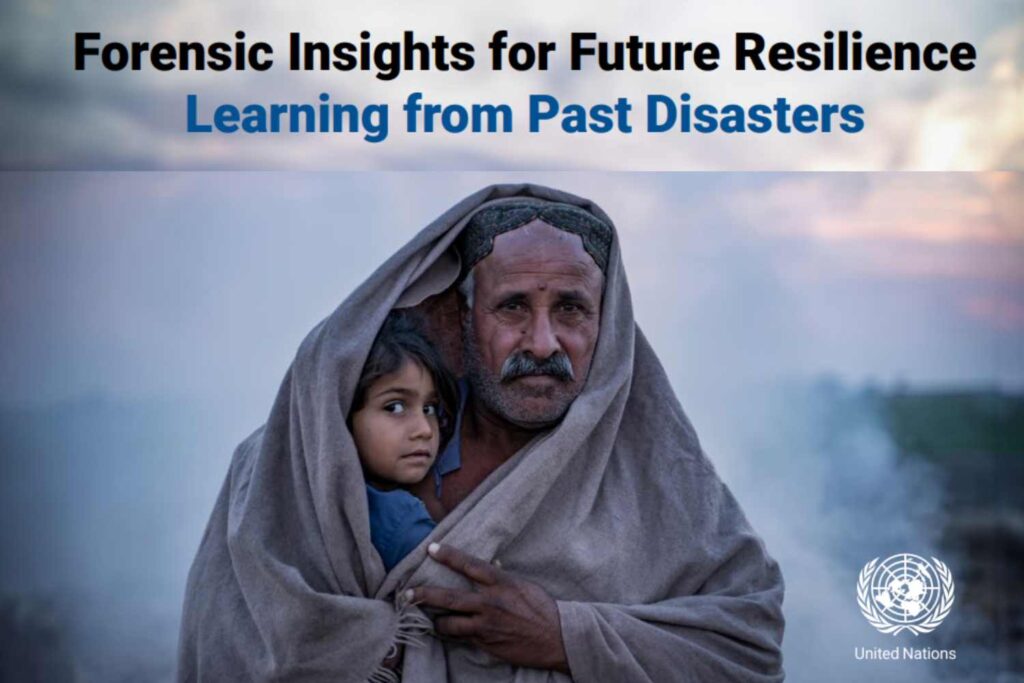
Global Assessment Report on Disaster Risk Reduction 2024. Forensic Insights for Future Resilience: Learning from Past Disasters

The GAR 2024 report examines current and emerging trends through forensic analysis of ten recent disasters, identifying key drivers of vulnerability such as poverty, inequality, unplanned urbanization, and weak enforcement of environmental and safety standards. It underscores the urgent need to shift from reactive responses to proactive, long-term, and risk-informed strategies. The report calls for

Global Assessment Report on Disaster Risk Reduction 2024. Forensic Insights for Future Resilience: Learning from Past Disasters Read More »

Hawaii Wildfires Expose Need for Resilience in a Polycrisis World

Joseph Fiskel argues that the Maui wildfire reveals just how unprepared communities are to face polycrises. In response, he advocates systems thinking and greater resilience: “Rather than simply ‘bouncing back’ from crises, a resilient organization will ‘bounce forward’ by sensing threats, adapting to new conditions, and improving its responsiveness to surprise events. This requires long-term thinking,

Hawaii Wildfires Expose Need for Resilience in a Polycrisis World Read More »

Let’s Avoid ‘Trigger Fixation’

The authors argue that a trigger event can’t start a crisis by itself; some underlying stress or stresses must also be operating. They contend that leaders should pay far more attention to these stresses, because they’re ultimately far more important. The original title of the article was “Let’s Avoid ‘Trigger Fixation.” The Globe and Mail

Let’s Avoid ‘Trigger Fixation’ Read More »

Navigating Polycrisis: Long-Run Socio-Cultural Factors Shape Response to Changing Climate

Societies throughout history have faced polycrises, but the outcomes range widely from collapse to positive adaptation. The authors have developed a Crisis Database of 150 past societal crises and find that three pressures make societies especially vulnerable to environmental stresses (and consequent polycrises) by impeding collective action: popular immiseration, elite overproduction and conflict, and state

Navigating Polycrisis: Long-Run Socio-Cultural Factors Shape Response to Changing Climate Read More »

An Embarrassment of Changes: International Relations and the COVID-19 Pandemic

Mathew Davies and Christopher Hobson argue that the COVID-19 pandemic is part of an ongoing polycrisis that requires significant changes to the ways in which the discipline of International Relations understands the world. They propose that “Polycrisis is a way of capturing the tangled mix of challenges and changes [that] closely interact with one another,

An Embarrassment of Changes: International Relations and the COVID-19 Pandemic Read More »

Scroll to Top