
Multiple global crises are worsening one another to produce what many policymakers, scholars, and commentators call a “polycrisis.” This website is a hub that helps this emerging community better understand and address the intersecting crises affecting humanity.
LATEST RESOURCES

Polycrisis and Global Production Networks: A Framework for Understanding Industry Dynamics in Times of Accumulated Uncertainty
The authors develop a framework for understanding how overlapping crises reshape global production networks and accumulate uncertainty for suppliers and workers. Using Bangladesh’s apparel industry as a case study, they analyse how historical trade shifts, ...

Mapping Technological Civilization in State Space: From Planetary Vital Signs to Multidimensional Risk Configurations
The author examines how global systemic risks can be understood as properties of multidimensional configurations rather than through conventional lists and rankings. The paper proposes a state-space framework in which current problems correspond to occupied ...

Building Resilient Global Governance for an Era of Recurring Crises
This policy brief examines how global governance arrangements can be made resilient amid increasingly frequent transnational crises that simultaneously demand and undermine international cooperation. Drawing on the concept of hybrid institutional complexes, the authors argue ...

From Frameworks to Implementation: Addressing Systemic Risk in the Real World
The authors examine how to bridge the gap between growing scientific understanding of systemic risks and the practical implementation of effective responses. They argue that although research has advanced in identifying how risks interact, compound, ...
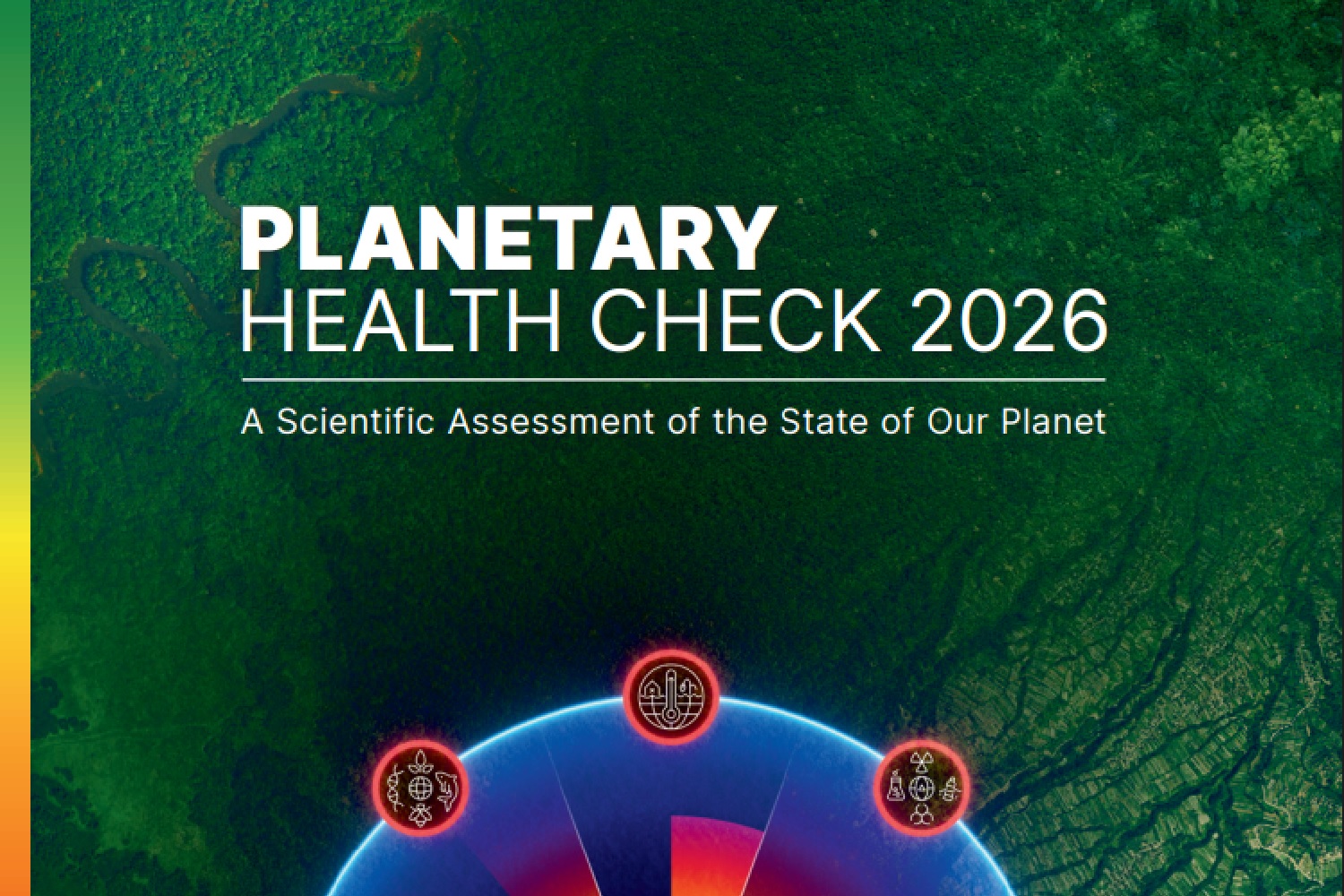
Planetary Health Check 2026
The Planetary Health Check 2026 provides an updated assessment of the nine Planetary Boundaries and finds that seven are transgressed, all with worsening trends, meaning humanity has pushed Earth outside of its Safe Operating Space. ...

Lessons from the Cambridge Conference on Catastrophic Risk 2026
This post reflects on the 2026 Cambridge Conference on Catastrophic Risk, examining governance challenges across nuclear war, AI and the information ecosystem, pandemics, and climate change. It argues that the field is increasingly shifting its ...
Navigating a Fragmenting World Order – Geopolitical and Geoeconomic Risks for Canadian Financial Institutions
This report examines how the shift from hyperglobalisation toward a more fragmented, geoeconomic world order is creating new and interconnected risks for Canadian financial institutions. Building on a "Triple Exposure" framework of Canada's structural position, ...
Global Risk Report 2026
The United Nations' Global Risk Report 2026 examines how perceptions of global risks have shifted since 2024, drawing on a survey of 1,300 stakeholders worldwide. The report finds that political risks have moved to the ...

The Predictive Power of Systemic Risk Indicators Under Extreme Scenarios
The authors examine the predictive power of systemic risk indicators for China's listed financial institutions between 2008 and 2025. They analyse indicator performance from three angles: macro-level timeliness, market performance of financial institutions, and early ...
FEATURED RESOURCES

Opportunities for Pathways Approaches for Adapting to Complex Climate Change Risks
The authors examine how adaptation pathways can be extended to address complex climate change risks arising from interactions among compounding hazards, cascading impacts, dynamic vulnerabilities, infrastructure interdependencies, and governance failures. They argue that conventional adaptation ...

Six Major Risks in Modern Society: Research Progress and Future Directions
The authors review six major systemic risks facing modern societies: geopolitical risks, global meteorological disaster risks, regional environmental risks, global supply chain risks, systemic financial risks, and technology-mediated societal and institutional risks. They show how ...

Reforming Global Health for an Age of Mistrust, Fragmentation and Overlapping Crises
The authors argue that global health architecture must be reformed to respond more effectively to an era of polycrisis. They propose three interlinked priorities: rebalancing power by strengthening country ownership, regional institutions, and the participation ...

Try our guided tour of essential themes in the polycrisis discussion and key texts in the Polycrisis Resource Library.

This map charts the emerging community of scholars and practitioners working on polycrisis and closely related topics.