Social Order and Governance

Echoes of Uncertainty: Reimagining Complexity of Global Risks in the Shadow of the Russian–Ukrainian Conflict

The authors explore risk perceptions in Ukraine and Poland in the context of the ongoing Russian–Ukrainian conflict. Drawing on cross-sectional survey data, the research reveals significant differences in how respondents from both countries perceive a range of global threats. By comparing perceptions of multiple potential risks that individuals may face in the foreseeable future, the […]

Echoes of Uncertainty: Reimagining Complexity of Global Risks in the Shadow of the Russian–Ukrainian Conflict Read More »

International Cooperation in Times of Polycrisis: Patchworks as Pathways in Earth System Governance

This paper re-examines the principles and precepts of ‘old’ multilateralism in the context of the global polycrisis. It offers an analytical framework for ‘new’ multilateralism in Earth system governance, emphasizing the limitations of Global North–Global South binaries and proposing “patchworks” as flexible, cross-scale pathways for cooperation across policy silos.

International Cooperation in Times of Polycrisis: Patchworks as Pathways in Earth System Governance Read More »

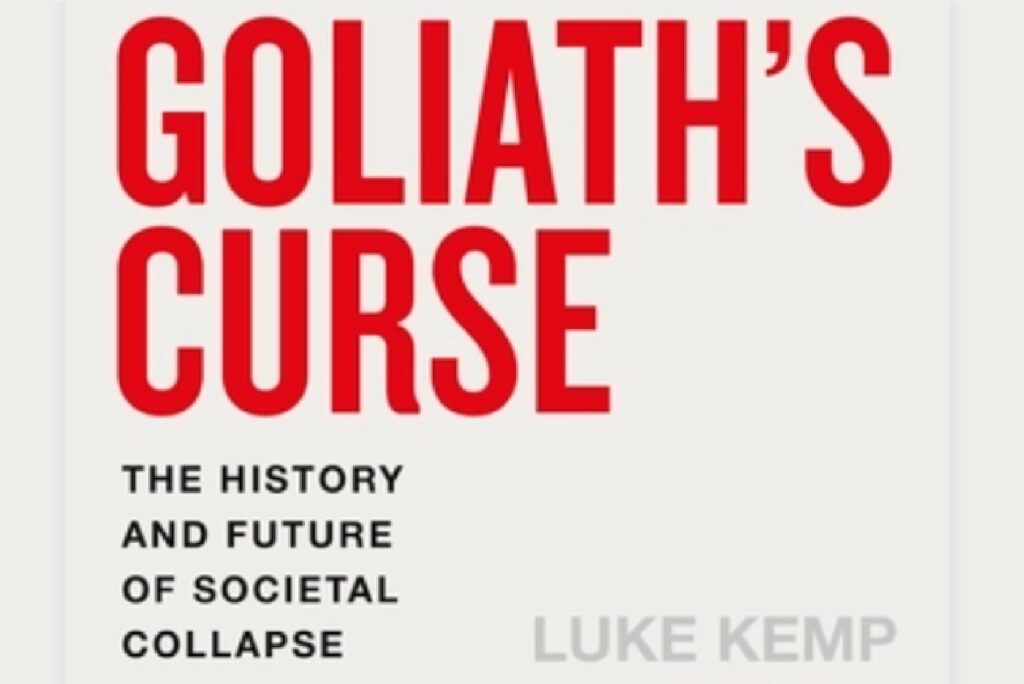
Goliath’s Curse: The History and Future of Societal Collapse

Luke Kemp explores the historical patterns and future risks of societal collapse, tracing the evolution of human societies from egalitarian hunter-gatherers to hierarchical empires dominated by extractive elites. He argues that large, centralised systems, “Goliaths”, become increasingly fragile as inequality and concentrations of power grow, ultimately hollowing them out before external shocks bring them down.

Goliath’s Curse: The History and Future of Societal Collapse Read More »

Risk Map 2026

This website presents Control Risks’ RiskMap 2026. It identifies four interconnected risks defining the global business environment in 2026: a new rules — no rules world, where governments are abandoning established norms in favour of transactional arrangements, replacing multilateral frameworks with protectionism and backroom deals; the rise of activated societies, where generations mobilised by grievance

Risk Map 2026 Read More »

Ability of Politicians to Act – Climate Protection in the Era of the Polycrisis

This report examines five key societal and economic developments that significantly influence the ability of politicians to act in an era of polycrisis. These include: the global polycrisis as a defining condition of our time; increasing fragmentation within society; the structural transformation of the public sphere from mass media to micro-publics; the growing limitations of

Ability of Politicians to Act – Climate Protection in the Era of the Polycrisis Read More »

Polycrisis! Implications for Public Policy in the Global South

This book explores contemporary public policy and governance in the Global South, offering comparative analyses and detailed case studies from Asia, Latin America, the Middle East, and Africa. It examines how governments are navigating 21st-century challenges such as the COVID-19 pandemic, climate change, democratic backsliding, deteriorating public services, and geopolitical shifts linked to the rise

Polycrisis! Implications for Public Policy in the Global South Read More »

Rethinking Societal Resilience in a Time of Polycrisis

The authors presents key insights from a scoping review on societal resilience in the context of polycrisis. It emphasises that strengthening societal resilience in the polycrisis requires a clear understanding of how interdependent and causally entangled crises interact. This understanding can inform the development of targeted policies that address the underlying drivers of vulnerability and

Rethinking Societal Resilience in a Time of Polycrisis Read More »

Impact of Global Risks on Economic Downturn in Countries Worldwide: Analysis of the Causes of the Situation and Opportunities for Growth Recovery

The authors examine the impact of global risks on economic growth dynamics across more than 200 countries from 1961 to 2023, revealing a consistent decline in growth rates linked to intertwined geopolitical, economic, social, environmental, and technological risks. Through structural analysis and analytical tools, they identify economic and environmental risks as key contributors to the

Impact of Global Risks on Economic Downturn in Countries Worldwide: Analysis of the Causes of the Situation and Opportunities for Growth Recovery Read More »

Conflict, Climate and Inequalities

This book offers a holistic framework for understanding the complex global transformations defining the current historical moment. Centred on three major themes, international relations, climate change, and inequality, it integrates insights from physics, complexity science, political economy, and development studies. The authors argue that the growing and seemingly unstoppable centralization of capital undermines national democracies,

Conflict, Climate and Inequalities Read More »

Public Administration in an Age of Polycrises: Multi-nodal Governance Approaches in Some South East Asian Countries

In this chapter, the authors explore how public administration can effectively respond to the contemporary polycrisis. Using a multi-nodal governance framework, the chapter examines how selected Southeast Asian countries, including Indonesia, the Philippines, Singapore, Thailand and Viet Nam, have navigated complex challenges such as environmental issues, disaster management, health and pandemic responses, and the rise

Public Administration in an Age of Polycrises: Multi-nodal Governance Approaches in Some South East Asian Countries Read More »

Scroll to Top