Geopolitics and International Security

Global Polycrisis: The Causal Mechanisms of Crisis Entanglement

The authors translate polycrisis from a loose concept into a research agenda by providing the concept with a substantive definition, highlighting its value-added in comparison to related concepts, and developing a theoretical framework to explain the causal mechanisms currently entangling many of the world’s crises. In this framework, a global crisis arises when one or […]

Global Polycrisis: The Causal Mechanisms of Crisis Entanglement Read More »
Can Democracy Survive the Polycrisis?

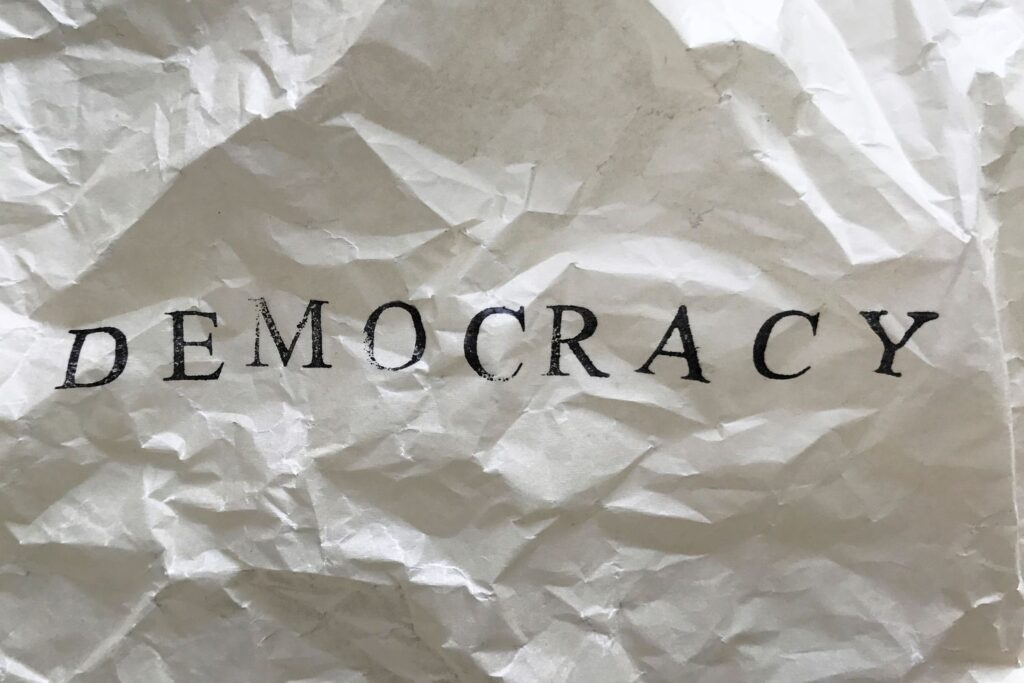
George Soros argues that there are three main sources of the polycrisis (in order of importance): artificial intelligence, climate change, and Russia’s war on Ukraine. AI poses a “mortal threat” to open societies via disinformation, and it provides closed societies new instruments of surveillance and control; climate change threatens to make large areas uninhabitable; but

Can Democracy Survive the Polycrisis? Read More »

Whose Polycrisis?

Farwa Sial argues that the polycrisis neologism is a feint that allows international financial institutions to continue business as usual by obscuring their role in global problems. She critiques definitions of polycrisis for downplaying the role of capitalism and global power hierarchies in the perpetuation of contemporary crises, and for overlooking the experiences of the

Whose Polycrisis? Read More »

World Economic Forum’s Global Risks Report 2023

Global Risks Report 2023

This 18th edition of the World Economic Forum’s Global Risks Report is based on a risk perceptions survey of 1200 experts on the likelihood, severity, and interconnections between 37 global risks. It finds that the biggest risk in the next two years is the cost of living crisis, and the biggest risk in the next

Global Risks Report 2023 Read More »

Top Risks 2023

Ian Bremmer and Cliff Kupchan present their top ten geopolitical risks for 2023: an increasingly rogue and reckless Russia; an increasingly powerful and unconstrained Xi Jinping; the weaponization of artificial intelligence; shockwaves of global inflation; Iran backed into a corner; higher energy prices; reversals of development; political divisions in the United States; the disruptive digital

Top Risks 2023 Read More »

How Many Shocks Can the World Take?

Stephen M. Walt considers a number of global shocks that have all happened in close temporal proximity to one another and are “overwhelming our collective ability to respond”: the breakup of the Soviet empire, China’s rise, 9/11 and the global war on terror, the 2008 financial meltdown, the Arab Spring, the global refugee crisis, the

How Many Shocks Can the World Take? Read More »

Megathreats: Ten Dangerous Trends that Imperil Our Future and How to Survive Them

The author defines megathreats as “severe problems that could cause vast damage and misery and cannot be solved quickly or easily” (p. 4). “We are facing megathreats unlike anything we have faced before… [and] they overlap and reinforce one another” (p. 5). Roubini explores ten megathreats: debt accumulation and debt traps; easy money and financial crises;

Megathreats: Ten Dangerous Trends that Imperil Our Future and How to Survive Them Read More »

Scroll to Top