Geopolitics and International Security

Immigration, War, Economic Collapse: Will the Global Order Change in 2026?

This article presents Fair Observers’s 2026 geopolitical outlook using a Social, Political, Economic, Religious, and Military framework. The authors argue that overlapping global stresses, immigration pressures, democratic dysfunction, economic fragility, and strategic rivalry, are accelerating institutional erosion. The analysis outlines key global risk dynamics, including the rise of far-right movements in Europe, increasing state fragility, […]

Immigration, War, Economic Collapse: Will the Global Order Change in 2026? Read More »

Global Risks Report 2026: Geopolitical and Economic Risks Rise in New Age of Competition

The Global Risks Report 2026 explores how a new competitive world order is reshaping global risks across domains. Over the next two years, geoeconomic confrontation is identified as the most severe risk, with economic and societal instability also rising sharply. Over a ten-year horizon, inequality emerges as the most interconnected long-term risk, while artificial intelligence shows the

Global Risks Report 2026: Geopolitical and Economic Risks Rise in New Age of Competition Read More »

Top Risks 2026

The report presents Eurasia Group’s annual forecast of the political risks most likely to play out over the course of 2026. It outlines ten key global developments expected to shape the geopolitical landscape, including state-level conflicts, technological disruption, institutional challenges, and economic pressures. The analysis frames 2026 as a potential tipping point, marked by heightened

Top Risks 2026 Read More »

The World Order After 2025

In this article, Yuen Yuen Ang argues that 2025 marks not just the end of the postwar global order but the emergence of a new one. She examines the collapse of a system built on US-led geopolitical stability, industrial progress, and globalization, highlighting internal contradictions such as concentrated authority, widening inequality, environmental degradation, and political

The World Order After 2025 Read More »

Global Risk Forecast 2026

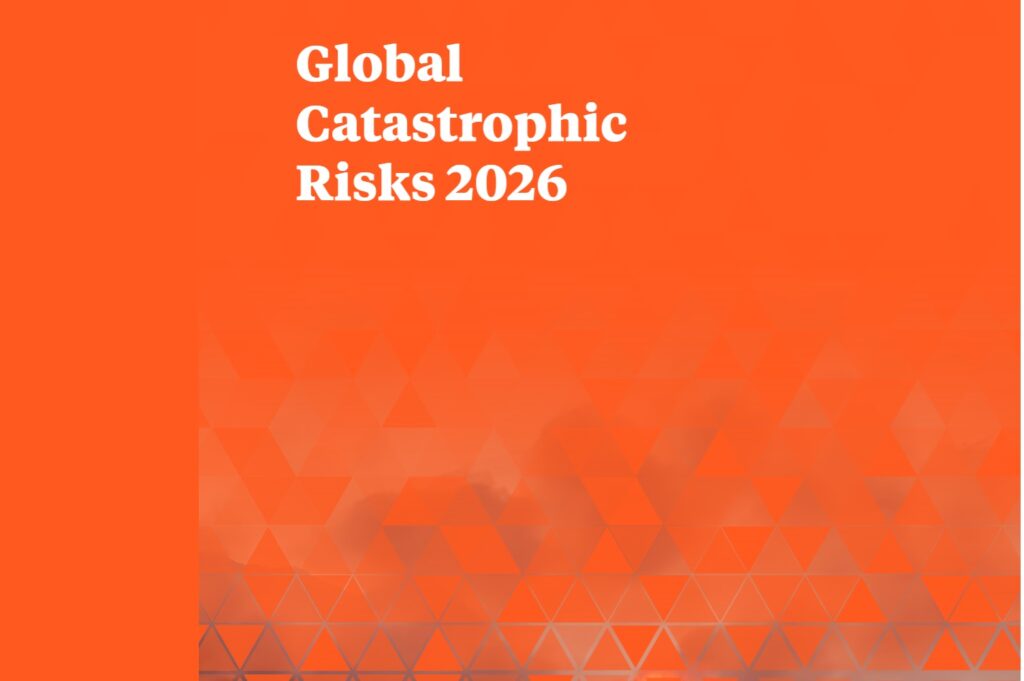
The Crisis24 Global Risk Forecast 2026 provides a strategic outlook on the evolving risk landscape heading into 2026. It identifies a global environment marked by intensifying geopolitical competition, persistent economic volatility, increasing cyber vulnerabilities, and escalating climate disruptions. The report emphasizes the convergence of immediate shocks with deeper structural stressors, highlighting how interconnected and compounding

Global Risk Forecast 2026 Read More »

Examining the Three Existential Threats of the 21st Century: Artificial Intelligence, Climate Change, and Nuclear Weapons

The authors critically examine three existential threats facing humanity in the 21st century: advanced artificial intelligence, escalating climate change, and nuclear weapons. Drawing on scientific consensus and growing institutional concern, they explore the structural features that make each threat existential and analyze their dangerous interactions. The authors propose a framework for future inquiry, policy, and

Examining the Three Existential Threats of the 21st Century: Artificial Intelligence, Climate Change, and Nuclear Weapons Read More »

Mapping the Hope Attractor: A Conversation with Thomas- Homer Dixon

In this conversation, Thomas Homer-Dixon introduces the Cascade Institute’s Polycrisis Core Model (PCM), a novel framework designed to map and analyse interactions among 11 critical global systems, each with multiple potential future states. The model employs cross-impact balance (CIB) analysis to evaluate over four million internally consistent scenarios, ultimately identifying 11 distinct “attractor” states. These

Mapping the Hope Attractor: A Conversation with Thomas- Homer Dixon Read More »

Tackling the Complex Links Between Climate Change, Conflict, and Health

The authors underscore the urgent need to address the interconnected threats of climate change, conflict, and health. They highlight how these threats not only cause direct harm, such as heat-related deaths and conflict-driven mortality, but also compound vulnerabilities by damaging health systems, disrupting essential services, and fueling cycles of instability. Fragile and conflict-affected states are

Tackling the Complex Links Between Climate Change, Conflict, and Health Read More »

The Weaponization of Emerging Technologies and Their Impact on Global Risk: A Perspective from the PfPC Emerging Security Challenges Working Group

The authors examine how emerging technologies, such as artificial intelligence, synthetic biology, quantum computing, and neurotechnology, are reshaping global security risks. The study argues that traditional threat-based security models are inadequate for addressing the complex, transnational, and increasingly weaponized nature of these technologies. The authors propose a shift toward risk-based frameworks that emphasize resilience, systemic

The Weaponization of Emerging Technologies and Their Impact on Global Risk: A Perspective from the PfPC Emerging Security Challenges Working Group Read More »

Scroll to Top