The Polycrisis
The Polycrisis is a newsletter and a series of essays and panels exploring intersecting crises with a particular emphasis on the political economy of climate change and global North/South dynamics.
Christopher Hobson often discusses the polycrisis in his blog posts, emphasizing the need to “honestly recognise and reckon with the complexity of the present moment.” “Polycrisis: In this Valley of Dying Stars” (18 August 2022) “Seeing Polycrisis: Facing Fractals” (26 August 2022) “Polycrisis and Metamorphosis: When Change Outpaces Comprehension” (2 September 2022) “Picking up Polycrisis:
Imperfect Notes on an Imperfect World Read More »
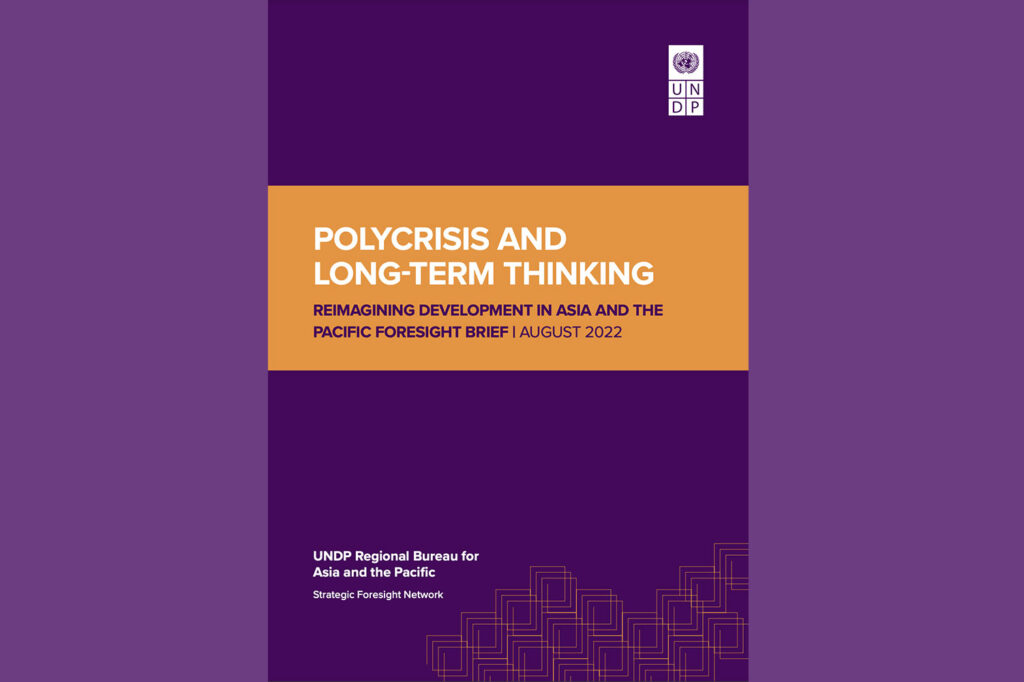
This Foresight Brief argues that conventional risk management frameworks cannot grapple with the growing number of systemic and existential risks generated by decades of globalization. Instead, these risks require more long-term thinking – “intentional consideration of what might happen in the future, the choices for influencing it and the consequences of those choices” (p. 10).
Adam Tooze frequently discusses various aspects of the polycrisis in his blog posts. Notable entries include: “Defining polycrisis – from crisis pictures to the crisis matrix” (24 June 2022) “Calibrating the polycrisis – with the help of the International Bank of Settlements” (26 June 2022) “Polycrisis – Thinking on the Tightrope” (29 October 2022) “Haiti
Against those who anticipate a smooth, timely transition to renewable energy and net-zero carbon emissions, Vaclav Smil argues that we are much more dependent on fossil fuels than we recognize so that an energy transition will be difficult and tumultuous. “The real wrench in the works: we are a fossil-fueled civilization whose technical and scientific
How the World Really Works Read More »
Adam Tooze examines the impacts of the covid-19 pandemic on finance and business, highlighting just how unprepared and vulnerable economic systems were to the crisis. He highlights the ways in which institutional failures, political interests, economic policies, and geopolitics interacted with the pandemic to shape its impacts. Characterizing the situation as a polycrisis, he applies
Shutdown: How Covid Shook the World’s Economy Read More »
Pablo Servigne and Raphaël Stevens confront the possibility of civilizational collapse within our lifetimes, examining scientific evidence of growing systemic crises. They connect abstract scientific findings to everyday experiences, linking the Anthropocene to our daily lives.
How Everything Can Collapse: A Manual for our Times Read More »
The authors argue that the worldwide production and distribution of food, fuel, and fibre has created a “global production ecosystem” subject to immense simplification, intensification, and control by humans attempting to maximize efficiency. The resulting system is homogenous, highly connected, and has weak feedbacks – “features [that] converge to yield high and predictable supplies of
Anatomy and Resilience of the Global Production Ecosystem Read More »
Mark Swilling proposes that “we need to understand the dynamics of the current global polycrisis as the emergent outcome of intersections between four dimensions of transition: socio-metabolic transition, techno-economic transition, socio-technical transition and long-term global development cycles. When understood as multiple cycles that intersect concurrently and asynchronistically across these four dimensions, the emergent outcome can
The Age of Sustainability: Just Transitions in a Complex World Read More »
In this speech, then President of the European Commission Jean-Claude Junker uses the term polycrisis (albeit only once) to refer to the combined migration, financial, and Brexit crises facing Europe. He proposed: “It is not so long ago that our Union was in danger of sleepwalking from one crisis to another without waking up… Since